Internal Links: Make Pages Easier to Find
Key takeaways
- Google says it generally crawls links in an HTML
aelement with anhrefattribute. - Descriptive, concise anchor text helps set expectations for readers and crawlers.
- Every important page should have at least one contextual internal link.
- Internal links support discovery, but they do not guarantee rankings or answer-engine inclusion.
What makes an internal link crawlable?
A crawlable internal link is normally an HTML a element with an href attribute. Google's link best practices say that links in other formats may not be reliably extracted by its crawlers.

Audit the rendered page, not only the CMS editor. A link that looks present in a design mock-up but never arrives in the HTML is having a private moment, not helping discovery.
What should internal anchor text say?
Anchor text should be descriptive, reasonably concise and relevant to both the source and destination page. Google explicitly recommends this because it gives context and helps users know what to expect.
Use meaningful phrases such as "technical SEO audit" rather than "click here". Do not turn every link into a tiny paragraph either. Clarity is doing the work.

Which pages need internal links first?
Start with pages that matter commercially and answer a clear user question, such as services, high-value category pages and useful explainers. Google says every page you care about should have a link from at least one other page on your site.
Map each target page to a small number of relevant source pages. A thoughtful route is better than a site-wide pile of unrelated navigation.
How should an internal-link audit work?
Export a list of key URLs, then record inbound internal links, anchor text, source page, rendered destination and status code. Look for orphaned pages, vague anchors, links to redirects and pages whose only links sit in repetitive boilerplate.
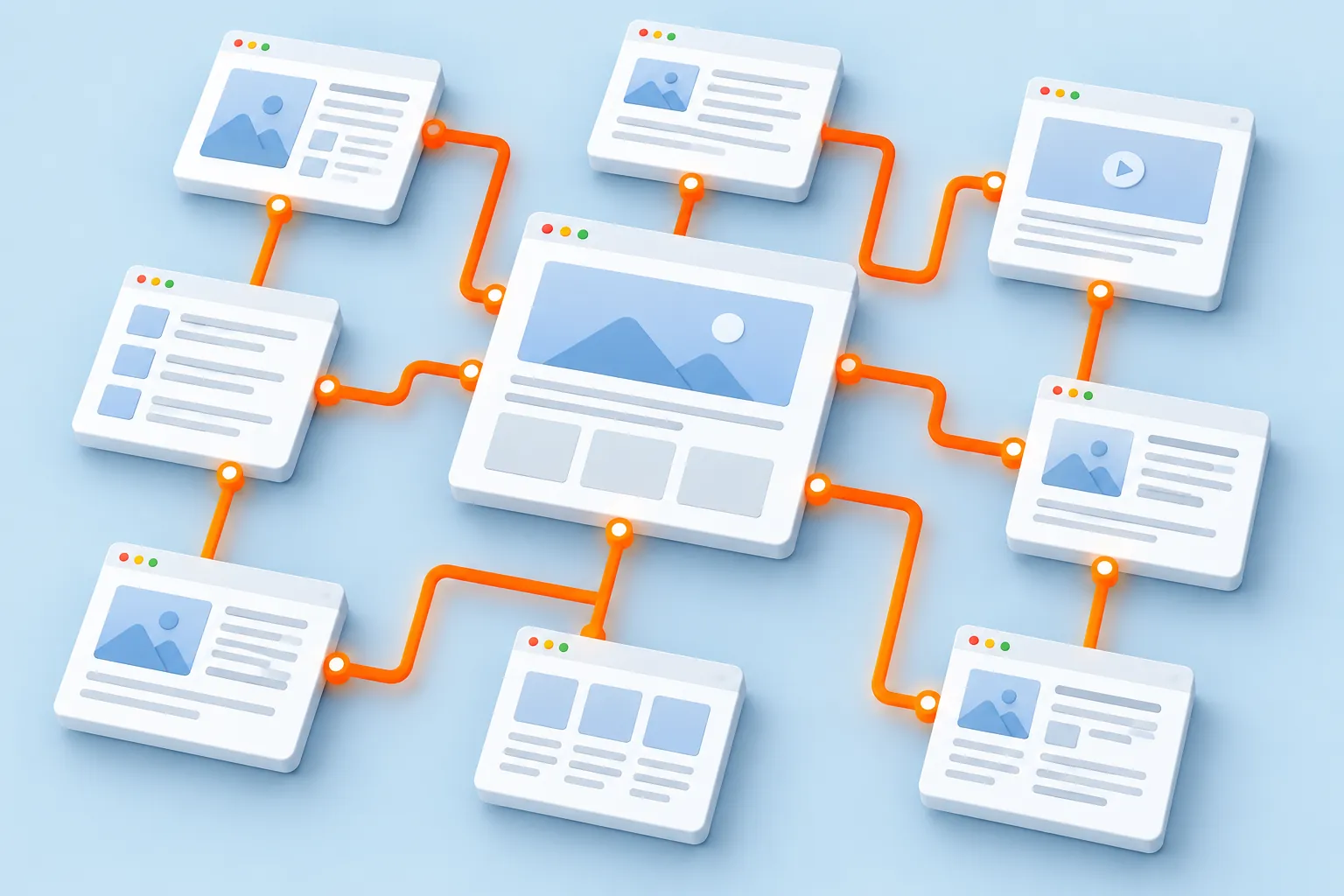
SAGEO can pair this work with a canonical URL audit because internal links should consistently point to the preferred page version. For markup, see SAGEO's guide to structured data, but remember that structured data describes content and does not replace useful navigational paths.
What should you measure after changes?
Measure crawl coverage, internal-link counts, key-page discovery and organic performance over a meaningful period. Google says structured data can provide explicit clues about page meaning, while its effects should be measured on stable pages with enough Search Console data.

Treat a lift as evidence to investigate, not a reason to declare victory after one cheerful graph.
Limitations
Internal links are one discovery and usability signal among many. They do not guarantee crawling, indexing, rankings, rich results or citations by answer engines.
Ready to make your important pages easier to reach?
Ask SAGEO for an internal-link audit that starts with revenue-critical pages and checks rendered HTML, destination status and anchor text.

Sources
- SEO Link Best Practices for Google, Google Search Central. Crawlable link formats, anchor text and internal-link guidance.
- Introduction to structured data markup in Google Search, Google Search Central. Structured data purpose and measurement guidance.